

Low-Level Laser Therapy (LLLT) for Autism: What Parents Should Know | LLLT for Autism in Bangalore
When Autism Spectrum Disorder (ASD) is diagnosed in a child, parents usually start to research the various types of therapies and interventions. Even though the present interventions such as speech therapy, occupational therapy and behavioral therapy still remain the main focus of treating autism, other emerging therapies are also drawing the attention of most families in order to help them improve their development. As awareness of LLLT for Autism in Bangalore continues to grow, many parents are exploring whether this non-invasive therapy can complement existing treatment plans and support their child’s overall development. Low-Level Laser Therapy (LLLT) is one of these methods.
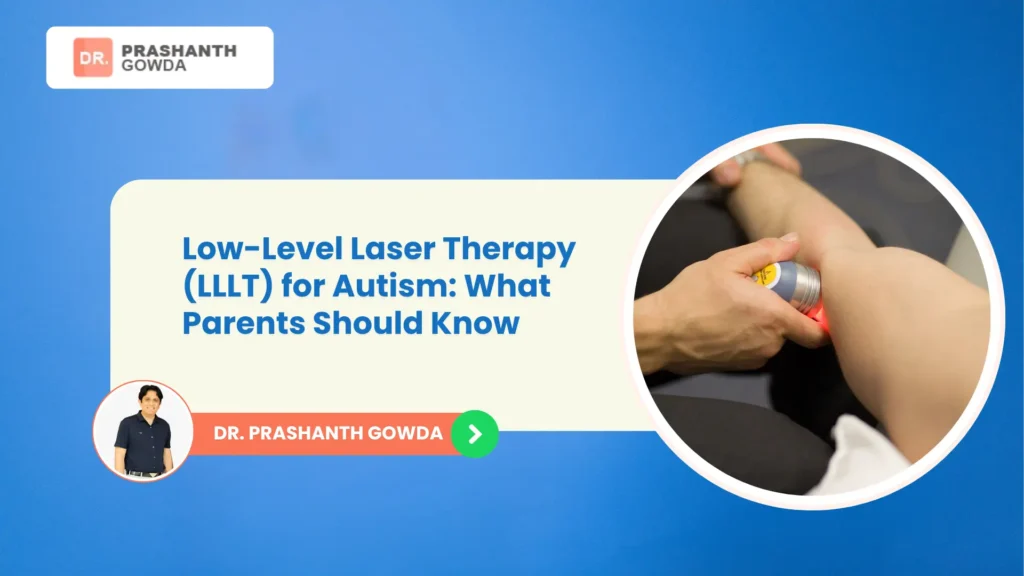
What Is Low-Level Laser Therapy?
Low-Level Laser Therapy involves using low-intensity light energy to stimulate cell activity as well as supplement natural bodily activities. The use of medications, injections and heat are also not required to make use of surgical lasers as LLLT can be conducted without the need of such actions, being non-invasive, painless and non-medical as well. Specialised light equipment is used therapy sessions to apply certain wavelengths of light to specific areas, supervised by trained practitioners.
Scientists are optimistic that photomodulation could be useful in increasing cellular energy generation, enhancing blood flow, and enhancing neurological functions. It has resulted in an increasing interest in its use as a complementary intervention for children with autism.
Why Are Parents Considering Laser Therapy for Autism?
Laser therapy attracts a lot of parents due to its non-invasive and mild manner. As the treatment is usually well accepted by the kids, it can sometimes be integrated in wider development programmes without interfering with other therapies.
Preliminary observations and early studies suggest that some children may experience improvements in:
- Attention and concentration
- Sensory regulation
- Social engagement
- Communication responsiveness
- Overall participation in therapy sessions
But one should realize that the outcomes may differ dramatically in different children. Autism impacts all children differently in that treatment outcomes are very individualised.
How Does Laser Therapy Fit into an Autism Treatment Plan?
The effectiveness as a supplement to the other interventions is one of the major benefits of Low-Level Laser Therapy. It is not meant to substitute for presented evidence-based therapies; this includes occupational therapy, speech therapy, behavioural therapy, sensory integration program, and educational support.
Rather, laser treatment tends to be a component of a multidisciplinary method to facilitate the general developmental aims of the child. Combined with traditional treatments, it can assist in developing a more comprehensive system of support that would address the individual needs of the child.
A Comprehensive Approach to Autism Support
In Bangalore, Dr. Prashanth Gowda is one of the earliest pediatricians to have proposed laser therapy as one of the forms of auxiliary interventions to children with autism. His science is about integrating new technologies and evidence-based developmental therapies to deliver comprehensive care.
The combination of laser therapy and speech therapy, occupational therapy, or sensory integration programmes, behavioral support, and parent guidance provides the families with a tailor-made treatment plan that can improve various areas of child growth.
Important Considerations for Parents
Before starting any new intervention, it is required that parents discuss with competent healthcare professionals the purpose of treatment, expected results and plans on how to monitor progress.
Some key considerations with respect to this are the following:
- Laser therapy is not a treatment for autism, but a supportive intervention.
- Treatment plans should always be customised to the child’s specific developmental needs.
- Continuous monitoring is needed in order to gauge success.
- Evidence-based treatment must continue to be a key aspect of autism care.
The Rise of Supportive Autism Therapy Approaches
These days, more people are curious about treatments used together with standard autism therapies. Because each child responds differently, families search for ways that might boost how kids connect with schoolwork, talking, and everyday tasks. Even though one method rarely fits everyone, some turn toward things like LLLT within plans built around personal needs, watching changes over time, plus steady growth through life’s stages.
Final Thoughts
With autism interventions still in their most dynamic phases of development, Low-Level Laser Therapy (LLLT) proves to be an up-and-coming reinforcement tool of developmental assistance that is non-invasive and, therefore, can be offered to families. For families considering LLLT for Autism in Bangalore, it is important to view the therapy as part of a comprehensive treatment approach rather than a standalone solution. Although additional scientific studies are required to grasp all its long-term advantages, preliminary studies have generated a lot of interest in developmental pediatrics. Laser therapy used in combination with standard therapies and individualized care could result in better developmental outcomes and quality of life for children with autism and their families.
1. Low Level Laser Therapy Explained?
Light at low levels can wake up cell function without needles or cuts. This kind of treatment reaches deep but stays gentle on the surface. Cells respond when touched by soft beams, not heat or force. The method works quietly inside tissue using calm rays instead of harsh tools.
2. Can LLLT Cure Autism?
Though it might help some symptoms, LLLT doesn’t fix autism itself. Instead, it’s used alongside other approaches.
3. Is laser therapy safe for children?
Most people find LLLT comfortable when done by someone who knows how it works.
4. Can LLLT be combined with other autism therapies?
Therapy might include talking, working on daily tasks, or focusing on behavior – each part plays a role. Sometimes one follows another; other times they overlap without warning.
5. Low Level Light Therapy autism treatment options in Bangalore?
Some autism specialists in Bangalore include LLLT within broader therapy plans. Treatment is delivered alongside other methods by teams focused on individual needs.