

Why Does My Child Vomit During Travel? Understanding Motion Sickness in Children | Child Specialist in Bangalore
Travel-related vomiting can be stressful for both children and parents, especially when it happens repeatedly during car rides, bus journeys, flights, or boat trips. If you are wondering, “Why Does My Child Vomit During Travel?”, motion sickness is one of the most common explanations. It occurs when the brain receives conflicting signals about movement from the eyes, inner ear, and body. Understanding the triggers and simple preventive measures can make journeys more comfortable. A Child Specialist in Bangalore can also help when travel-related vomiting is frequent or unusually severe.
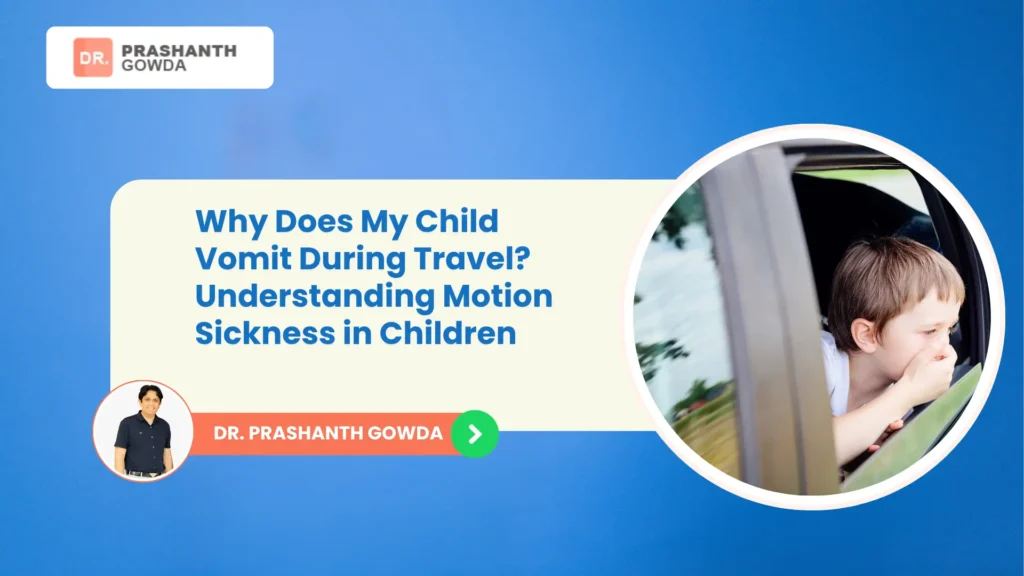
Motion sickness happens when the brain receives different information about movement. For example, a child's inner ear may sense that the vehicle is moving while the eyes are focused on a book or screen that appears stationary.
This mismatch can affect the brain's balance and movement-processing systems, leading to nausea, dizziness, sweating, and sometimes vomiting. Motion sickness can affect children of different ages, although some children may be more prone to it than others.
Several situations can increase the likelihood of motion sickness.
Looking at Screens or Books
Reading, watching videos, or playing games during a moving journey can increase the mismatch between visual and inner-ear signals. This may make nausea more likely.
Sudden or Repeated Movement
Frequent turns, acceleration, braking, or movement on winding roads can trigger symptoms, particularly in children who are already sensitive to motion.
Strong Smells
Strong food, fuel, perfume, or other odors may worsen nausea during travel. A well-ventilated vehicle can sometimes make the journey more comfortable.
Traveling on an Empty or Overfull Stomach
Very heavy meals immediately before travel may worsen discomfort. At the same time, prolonged fasting may not be ideal for every child. A light, familiar meal and adequate fluids may be more comfortable.
Vomiting is not the only sign. Children may initially complain of nausea, dizziness, headache, stomach discomfort, or feeling unusually warm.
Parents may also notice pale skin, sweating, yawning, increased saliva, or a sudden loss of interest in activities.
Symptoms often improve once the movement stops, although some children may feel tired or unsettled for a short time afterward.
Simple changes can reduce symptoms for many children. Encourage your child to look outside at distant, stable objects rather than reading or using a screen. Keeping the vehicle cool and well ventilated may also help.
Plan regular breaks during longer road journeys. Encourage small sips of water and offer light, familiar foods rather than large or greasy meals immediately before traveling. Where possible, choose a seating position with less movement and better forward visibility. For younger children, always follow appropriate car-seat and vehicle-safety recommendations rather than changing seating solely to reduce motion sickness.
If vomiting occurs, stop the journey safely when possible and allow your child to rest. Offer small amounts of fluid once they are comfortable rather than giving a large quantity immediately.
Keep an eye out for dehydration, especially if vomiting continues. Repeated vomiting can lead to reduced fluid intake and fewer wet diapers or urination. Parents should avoid giving anti-nausea medicines without appropriate medical advice, as some medications may not be suitable for young children.
Motion sickness generally has a clear relationship with travel and improves when the movement stops. If your child's vomiting happens frequently outside travel, occurs with severe headaches, significant abdominal pain, fever, fainting, confusion, vision changes, or other unusual symptoms, medical evaluation is important.
A Child Specialist in Bangalore can assess the child's symptoms, medical history, and travel pattern to determine whether motion sickness is the likely cause or whether another condition needs consideration.
Emergency medical attention may be needed if bleeding is heavy, does not stop despite prolonged firm pressure, follows a significant facial injury, or causes symptoms such as fainting, severe weakness, or difficulty breathing. If your child has a known bleeding disorder or takes medication that affects blood clotting, seek medical advice promptly when significant nosebleeding occurs.
Conclusion
If you have been asking, “Why Does My Child Vomit During Travel?”, motion sickness may be responsible, particularly when nausea and vomiting occur during vehicle movement and improve after the journey ends. Reducing screen use, encouraging distant viewing, maintaining ventilation, offering suitable meals, and taking breaks can help. If vomiting is frequent, severe, or occurs even when your child is not traveling, consult a Child Specialist in Bangalore for appropriate evaluation and guidance.
FAQ’s
Motion sickness occurs when the brain receives conflicting movement signals from the eyes, inner ear, and other sensory systems.
Using phones or tablets during travel can increase visual-motion mismatch and may make nausea or vomiting more likely.
A light, familiar meal may be preferable to a very heavy meal or prolonged fasting before a journey.
Yes. Some children are particularly sensitive to vehicle movement and may develop symptoms even during relatively short journeys.
Limit screen use, encourage looking outside, maintain ventilation, provide suitable food and fluids, and take breaks during longer journeys.