

Is Your Child’s Walking Pattern Normal? Understanding Common Foot and Gait Concerns | Pediatrician in HSR Layout
Watching a child learn to walk is an exciting milestone, but parents may become concerned when their child’s feet appear turned inward, outward, flat, or when the walking pattern looks different from other children. If you are wondering whether your child’s walking pattern is normal, it is important to remember that gait changes are common during early childhood. A Pediatrician in HSR Layout can help assess whether a walking pattern is part of normal development or needs further evaluation.
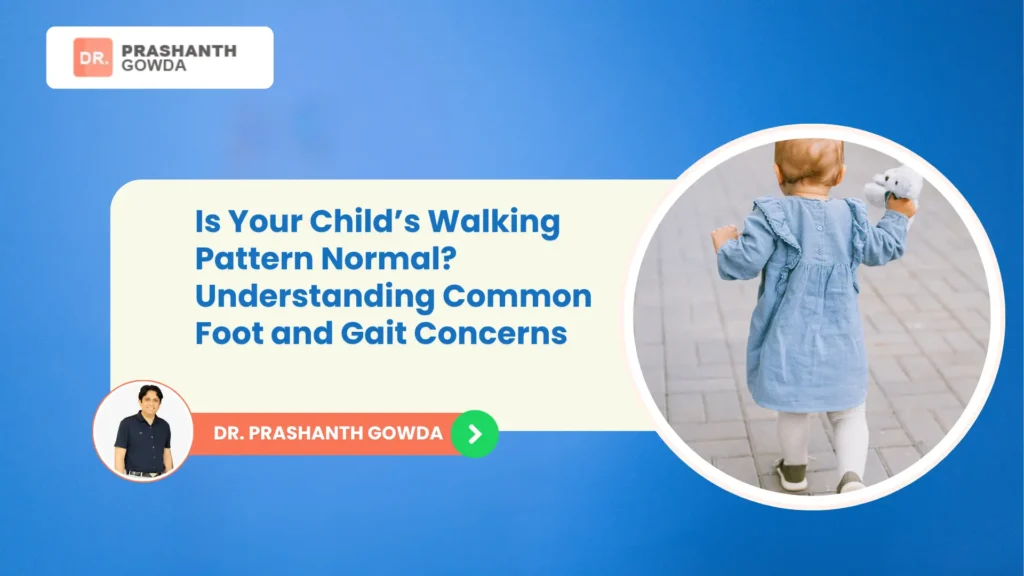
Walking develops gradually as muscles, bones, joints, balance, and coordination mature. Young children may initially walk with their feet placed widely apart and take short, unsteady steps. As they grow, their posture, leg alignment, and walking style naturally change. Some variations that appear unusual to parents may gradually improve without treatment.
The child's age, developmental stage, family history, and overall movement are important when assessing gait.
Flat Feet
Flat feet are common in young children because the arches of the feet may not be fully developed. In many children, the arch becomes more noticeable as they grow. Flexible flat feet are often painless and may not interfere with normal activities. Persistent pain, stiffness, or difficulty walking deserves medical assessment.
In-Toeing
In-toeing means the feet point inward while walking. It can be related to the position of the feet, lower legs, or thigh bones. Many children with mild in-toeing improve naturally as they grow. However, significant asymmetry, pain, frequent falls, or difficulty with activities should be evaluated.
Out-Toeing
Some young children walk with their feet pointing outward. The cause may vary depending on age and developmental stage. If out-toeing is persistent, worsening, significantly uneven, or associated with discomfort, a healthcare professional can assess the child's gait and leg alignment.
Toe Walking
Some children occasionally walk on their toes while learning to walk. Persistent toe walking, particularly beyond the expected developmental period, may require evaluation. A doctor may consider the child's flexibility, muscle tone, coordination, developmental history, and ability to place the heels flat on the ground.
A gait variation is generally more reassuring when the child is active, comfortable, developing appropriately, and able to participate in age-appropriate activities without significant difficulty. Walking patterns can change as children grow. Parents should avoid comparing their child's gait too closely with siblings or other children because developmental timelines can differ.
Parents should arrange an assessment if their child develops persistent pain, swelling, stiffness, limping, frequent falls, significant difficulty running, or a sudden change in walking pattern.
One-sided differences are also worth discussing with a doctor. A child who previously walked normally but suddenly begins limping or avoiding weight-bearing should be assessed promptly. Other developmental concerns, muscle weakness, poor coordination, or difficulty keeping up with peers may also warrant evaluation. A Pediatrician in HSR Layout can perform an initial examination and determine whether the child needs further assessment by an orthopaedic specialist, physiotherapist, or another healthcare professional.
Not every gait variation requires special footwear, braces, exercises, or treatment. Management depends on the underlying cause and whether the child has pain or functional limitations.
Parents should avoid purchasing corrective footwear or using stretching exercises without professional guidance. In many healthy children, normal growth and development are enough to improve mild gait variations.
Parents can observe how the child walks, runs, climbs stairs, and participates in play. Notice whether the pattern is symmetrical and whether the child experiences pain or avoids certain activities. If a walking concern is persistent, recording a short video of the child's usual walking pattern can provide useful information during a medical consultation.
Conclusion
Understanding whether a child’s walking pattern is normal requires looking at their age, development, symptoms, and overall movement rather than focusing on foot position alone. Flat feet, in-toeing, out-toeing, and occasional toe walking can occur during childhood and may improve naturally. However, persistent pain, limping, weakness, frequent falls, significant asymmetry, or sudden gait changes should be evaluated. Consulting a Pediatrician in HSR Layout can help parents understand their child’s gait and determine whether further assessment is needed.
FAQ’s
Flat feet are common in young children, particularly when the feet are flexible and painless. The arches may become more visible with growth.
Mild in-toeing is often part of normal development and may improve with age, but persistent symptoms or functional difficulties deserve evaluation.
Occasional toe walking can occur during development, but persistent toe walking should be assessed to identify possible contributing factors.
Most painless flexible flat feet do not require special shoes. Treatment should be recommended based on individual symptoms and examination findings.
Seek medical advice for persistent pain, limping, weakness, frequent falls, significant asymmetry, or sudden changes in walking ability.