

Why Do Children Get Frequent Leg Pains? Understanding Growing Pains vs Other Causes | Pediatrician Doctors in Sarjapur Road
Leg pain is a common complaint during childhood, and it can understandably make parents concerned when it keeps returning. If you are wondering, “Why Do Children Get Frequent Leg Pains?”, the answer can vary depending on the child’s age, activity level, pain pattern, and other symptoms. While growing pains are one possible explanation, not every episode of leg pain should automatically be attributed to growth. Consulting Pediatrician Doctors in Sarjapur Road can help determine whether the discomfort is a normal childhood complaint or needs further evaluation.
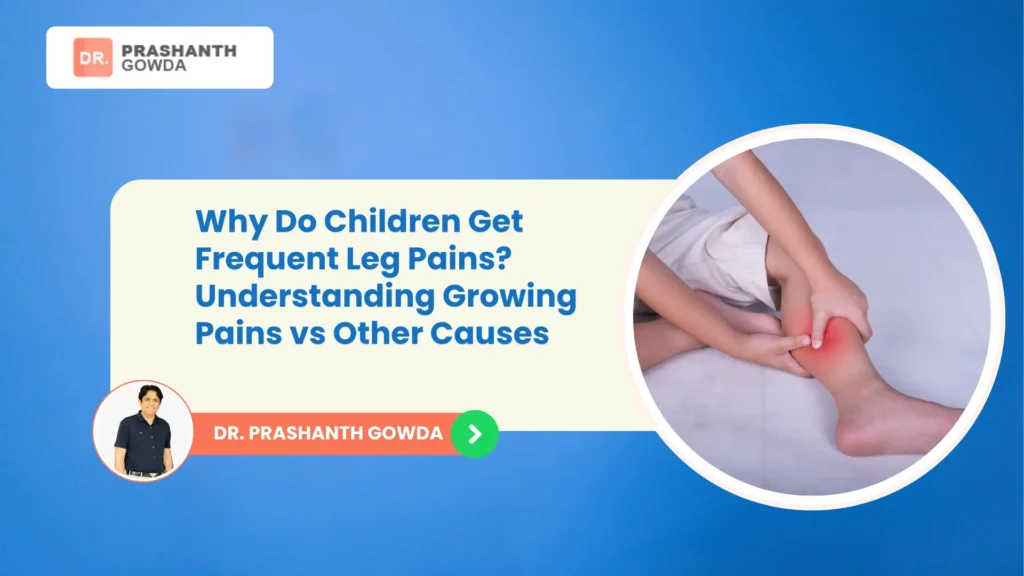
Growing pains are recurring aches that commonly affect children, particularly in the evening or at night. They usually occur in both legs and are often felt in the muscles of the thighs, calves, or behind the knees.
Despite their name, growing pains are not necessarily caused directly by bones growing. They are considered a common childhood pain pattern, and the exact cause is not always clear. A child with typical growing pains generally remains active and well during the day, without persistent limping or noticeable weakness.
Several factors can contribute to leg discomfort in children.
Physical Activity
Running, jumping, sports, and active play can place temporary stress on muscles and joints. Children may notice soreness later in the day, particularly after unusually intense activity.
Growing Pains
Typical growing pains tend to occur intermittently, often in the evening or at night. They generally do not cause persistent daytime disability.
Minor Injuries
Small muscle strains, bumps, or sprains can cause localized pain. Children may not always remember or mention a minor injury, so parents should observe whether discomfort follows particular activities.
Foot or Gait Problems
Differences in foot position, walking pattern, or leg alignment may sometimes contribute to discomfort during activity. Persistent pain associated with walking or running deserves medical assessment.
Growing pains are more likely when the pain:
- Occurs in both legs
- Appears mainly in the evening or at night
- Comes and goes rather than remaining constant
- Does not cause a limp
- Does not prevent normal daytime activities
- Occurs without swelling, redness, or fever
Some children may feel completely comfortable the following morning and return to their usual activities.
Not all recurrent leg pain is growing pain. Pain that is consistently limited to one leg, occurs during the day, becomes progressively worse, or interferes with walking should be assessed.
Other possible causes include injuries, joint inflammation, infections, nutritional problems, foot-related concerns, or other musculoskeletal conditions. Parents should also pay attention to associated symptoms rather than focusing only on the location of the pain.
Medical assessment is particularly important when leg pain is accompanied by swelling, redness, warmth, persistent joint stiffness, fever, unexplained weight loss, unusual tiredness, weakness, or repeated nighttime waking.
A child who develops a persistent limp, refuses to walk, or has difficulty bearing weight should be evaluated promptly. Pain that consistently affects one specific area or progressively becomes more severe also deserves professional attention.
For occasional, mild discomfort with a pattern consistent with growing pains, gentle massage and a warm bath may provide comfort. Adequate rest after demanding physical activity can also help. Parents should encourage children to describe where the pain occurs, when it starts, and whether anything makes it better or worse.
Avoid giving pain medicines repeatedly without understanding the reason for recurring symptoms. If the pain continues or changes in pattern, medical evaluation is more appropriate than relying only on home measures.
A doctor may ask about the child's activity, pain location, timing, duration, sleep, walking pattern, previous injuries, nutrition, and other symptoms.
The physical examination may include checking the muscles, joints, feet, leg alignment, walking pattern, and overall development. Tests are not always necessary for typical growing pains but may be considered when symptoms are unusual. Pediatrician Doctors in Sarjapur Road can help parents understand the child's symptoms and decide whether observation, treatment, or further specialist evaluation is appropriate.
Conclusion
If you are wondering, “Why Do Children Get Frequent Leg Pains?”, remember that growing pains are common, but recurring leg discomfort can have several possible causes. Pain that occurs mainly at night, affects both legs, and does not interfere with daytime activity may fit a typical growing-pain pattern. However, persistent daytime pain, limping, swelling, fever, weakness, or worsening symptoms should be medically assessed. Consulting Pediatrician Doctors in Sarjapur Road can help identify the cause and provide appropriate guidance for your child’s health.
FAQ’s
Growing pains are usually aching sensations in both legs, often occurring in the evening or at night without daytime walking problems.
Despite their name, growing pains are not proven to result directly from bones growing and their exact cause remains uncertain.
Yes. Running, jumping, sports, or unusually intense activity can cause temporary muscle soreness or discomfort.
Yes. Typical growing pains commonly affect both legs, although the location and intensity may vary between episodes.
Pain with limping, swelling, fever, weakness, persistent daytime discomfort, or worsening symptoms should be medically evaluated.