

Every Child Is Unique: Understanding Your Child’s Different Way of Thinking | Pediatrician Doctors In Bangalore
Every child has a unique personality, learning style, interests, and way of understanding the world. Some children learn quickly through visual activities, while others understand better through listening, exploring, or hands-on experiences. Parents should recognise these individual differences instead of comparing their children with others. Understanding a child’s thinking pattern helps parents provide the right encouragement and emotional support. Consulting experienced Pediatrician Doctors In Bangalore can help parents understand their child’s developmental milestones, behavioural patterns, and individual needs.
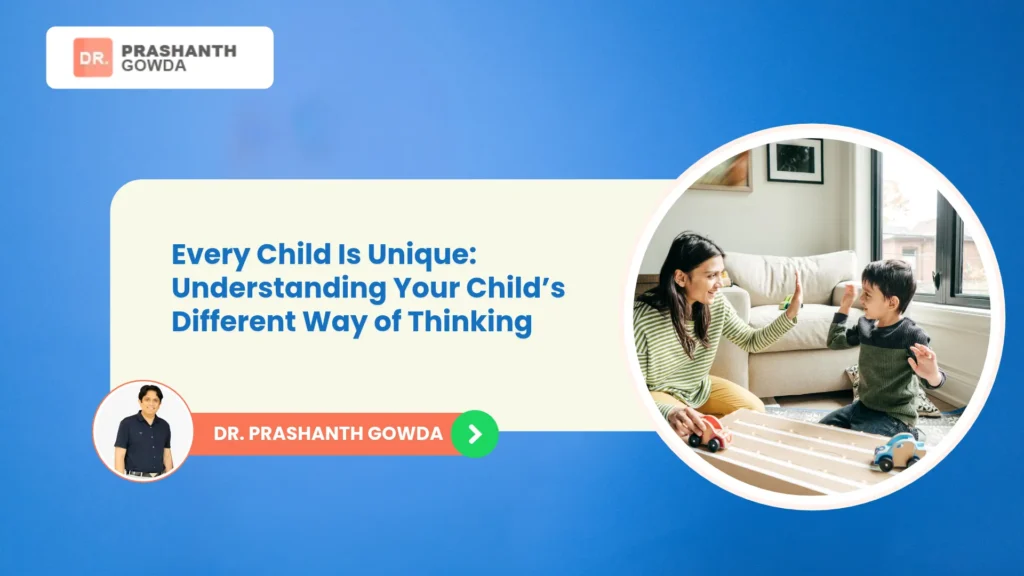
Dr. Prashanth Gowda explains why every child thinks differently and how parents can support individual learning styles and development.
Conclusion
Every child has a unique way of thinking, learning, and expressing emotions. Recognising these differences helps parents create a positive environment where children feel confident, supported, and appreciated. Instead of comparing children, parents should focus on their individual strengths, interests, and developmental progress. Providing encouragement, patience, and opportunities for exploration supports healthy growth and independent thinking. Consulting experienced Pediatrician Doctors In Bangalore can help parents better understand their child’s developmental needs and address concerns early.
FAQ’s
Children develop different thinking patterns because of their personalities, experiences, environments, interests, and individual developmental differences.
Parents can observe children's interests, communication, problem-solving approaches, learning preferences, and reactions during everyday activities.
No. Comparing children can affect confidence. Parents should appreciate individual strengths and encourage progress according to each child's abilities.
Children learn through different experiences, including visual activities, listening, movement, and practical exploration, influencing their understanding and engagement.
Parents should seek professional advice when developmental delays, communication difficulties, behavioural changes, or learning challenges consistently affect everyday activities.