

Mouth Breathing in Children: What It Means and When Parents Should Seek Help | Child Specialist in Bangalore
Mouth breathing in children can sometimes go unnoticed, especially when it happens mainly during sleep. If your child regularly breathes through the mouth instead of the nose, consulting a Child Specialist in Bangalore can help identify whether the cause is simple nasal congestion, allergies, enlarged adenoids, or another underlying concern. Understanding the warning signs can help parents decide when medical attention is needed.
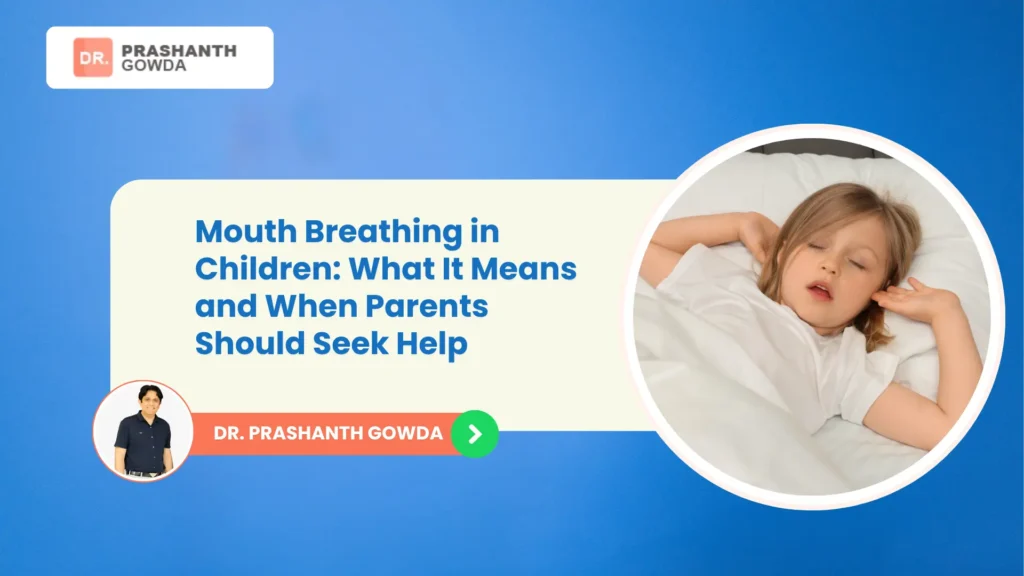
Mouth breathing occurs when a child primarily uses the mouth to breathe rather than breathing comfortably through the nose. It may happen occasionally during a cold or blocked nose, but persistent mouth breathing can have different causes.
Parents may notice an open mouth while sleeping, noisy breathing, dry lips, drooling, snoring, or a dry mouth after waking. Some children may also appear tired during the day if their sleep is repeatedly disturbed.
Several factors can contribute to mouth breathing. Identifying the underlying reason is important rather than treating the habit alone.
Nasal Blockage
Colds, allergies, nasal congestion, or recurrent infections can make nasal breathing difficult. A child may temporarily switch to mouth breathing until the nose becomes clear.
Enlarged Adenoids or Tonsils
Enlarged adenoids or tonsils can narrow the upper airway and make comfortable nasal breathing more difficult, particularly during sleep. Snoring and restless sleep may occur alongside mouth breathing.
Allergies
Children with allergic rhinitis may experience persistent nasal congestion, sneezing, itching, and difficulty breathing through the nose. Ongoing congestion can encourage mouth breathing.
Habitual Mouth Breathing
In some children, mouth breathing can continue even after the original nasal obstruction improves. A pediatric assessment can help determine whether there is an ongoing physical or sleep-related cause.
Occasional mouth breathing during an illness is usually not concerning. Persistent mouth breathing, however, may be associated with disturbed sleep, dry mouth, bad breath, and daytime tiredness.
Long-term mouth breathing may also affect oral health because reduced saliva around the mouth can increase dryness and potentially contribute to dental problems. In some children, chronic airway or breathing difficulties may also influence facial and dental development.
This does not mean every child who mouth-breathes will develop complications. The risk depends on the cause, duration, severity, and overall health of the child.
Parents should consider medical evaluation when mouth breathing occurs frequently or continues after a cold or nasal blockage has resolved. It is especially important to seek advice if the child snores regularly, sleeps restlessly, wakes frequently, has pauses in breathing, struggles to breathe during sleep, or appears unusually tired during the day.
A Child Specialist in Bangalore can assess the child's symptoms, examine the nose and throat, review sleep patterns, and determine whether further evaluation by an ENT specialist or dentist may be appropriate.
Parents should avoid assuming that mouth breathing is simply a habit. Keep track of when it happens and whether it is more noticeable during sleep, exercise, or periods of nasal congestion.
Maintaining a comfortable sleeping environment and addressing known nasal allergies or congestion with appropriate medical guidance may help. Parents should avoid using medications or nasal treatments without professional advice, particularly in young children. If snoring or breathing difficulties are present, recording a short sleep video may also help the doctor understand the pattern during consultation.
Conclusion
Persistent mouth breathing in children should not always be dismissed as a harmless habit. Temporary mouth breathing can occur with a blocked nose, but frequent or ongoing symptoms may be linked to allergies, enlarged adenoids, tonsils, or other breathing concerns. If your child regularly mouth-breathes, snores, sleeps poorly, or shows daytime tiredness, consulting a Child Specialist in Bangalore can help identify the cause and guide appropriate care.
FAQ’s
Occasional mouth breathing can occur during colds or nasal congestion, but persistent mouth breathing should be evaluated to identify the underlying cause.
Nasal blockage, allergies, enlarged adenoids, enlarged tonsils, or other airway concerns can make nasal breathing difficult during sleep.
Yes. Allergies can cause persistent nasal congestion, making it difficult for children to breathe comfortably through their nose.
Mouth breathing and snoring can occur together, particularly when nasal obstruction or enlarged adenoids and tonsils affect nighttime breathing.
5. Should I worry if my child mouth-breathes only during a cold?